The Kilimanjaro Day Trip: What You Need to Know Before You Go
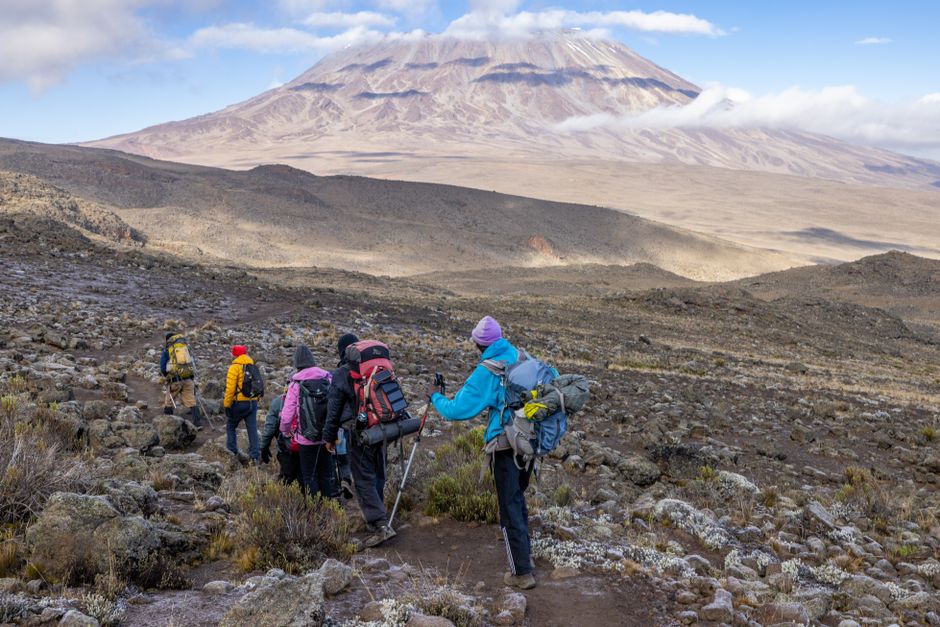
A kilimanjaro day trip is absolutely possible — and it’s one of the most rewarding ways to experience Africa’s highest mountain without spending a week on the trail.
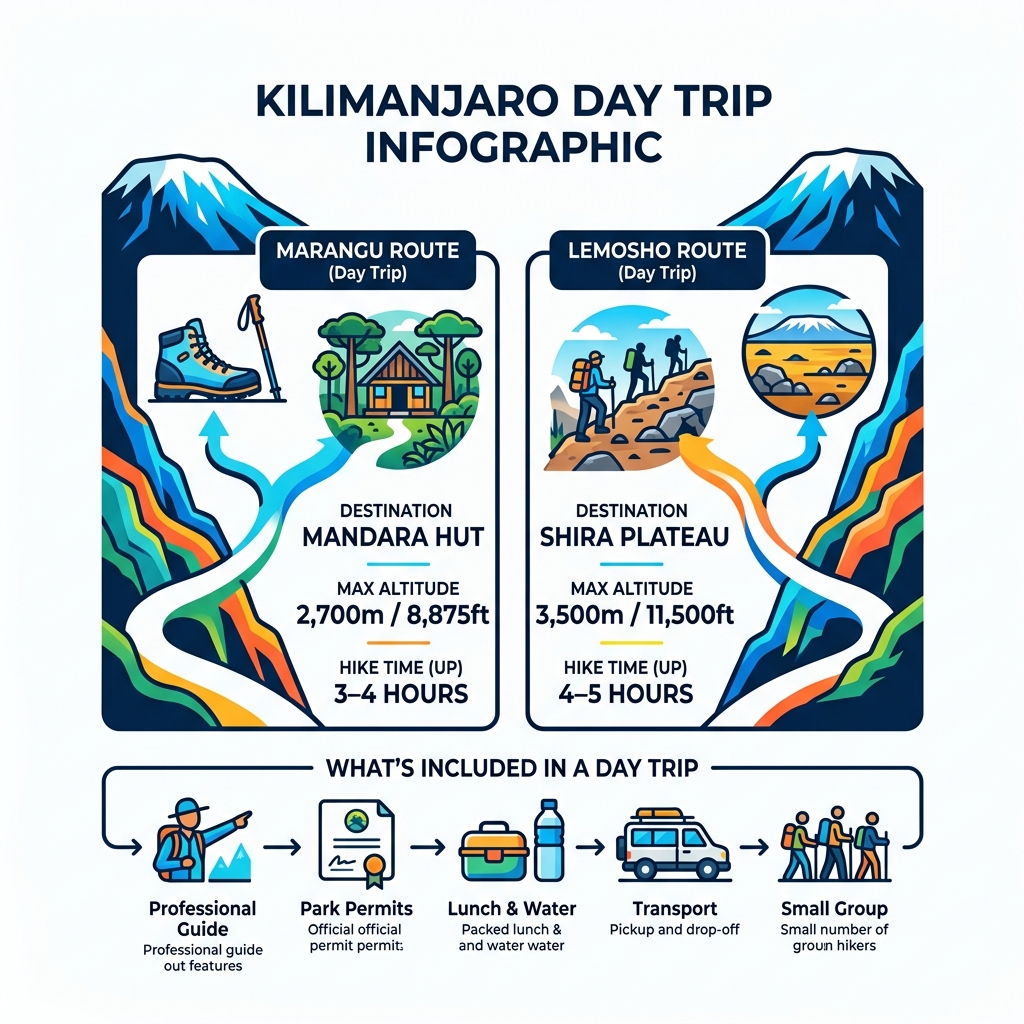
Quick answer: You can hike part of Kilimanjaro in a single day, reaching destinations like Mandara Hut (2,700m) via the Marangu Route or the Shira Plateau (3,500m) via the Lemosho Route. You won’t reach the summit (5,895m), but you’ll walk through stunning rainforest, spot wildlife, and get a genuine taste of the mountain.
| Route | Destination | Max Altitude | Hike Time (Up) | Price Range (per person) |
|---|---|---|---|---|
| Marangu | Mandara Hut | 2,700m / 8,875ft | 3–4 hours | ~$195–$339 |
| Lemosho | Shira Plateau | 3,500m / 11,500ft | 4–5 hours | ~$220–$480 |
Who is this for?
- Travelers with limited time between a safari and their flight home
- Families with children aged 8 and up
- First-time hikers who want a taste of Kilimanjaro without committing to 5–9 days
- Anyone on a tighter budget who still wants a bucket-list experience
The hikes are guided, require a national park permit (arranged by your operator), and typically run as a full day — pickup as early as 6:00 AM, back by late afternoon.
Don’t underestimate it though. Even a day hike involves 900m–1,000m of elevation gain at altitude. It’s rewarding, but it does require some preparation.
Popular Routes for a Kilimanjaro Day Trip
When people ask us about a kilimanjaro day trip, they often assume there is only one way up. In reality, Kilimanjaro National Park offers a few distinct “doorways” into its ancient ecosystems. While the mountain has many routes to the summit, only a couple are practical for a one-day excursion.
The two primary contenders are the Marangu Route and the Lemosho Route. Each offers a completely different landscape, from deep, mossy rainforests to high-altitude volcanic plateaus.

The Marangu Route: A Classic Kilimanjaro Day Trip Experience
The Marangu Route is the most popular choice for a kilimanjaro day trip. Historically known as the “Coca-Cola” route because it was the first to offer comforts like hut accommodations and bottled drinks, it provides a gentle, steady ascent that is perfect for beginners or families.
Your journey begins at the Marangu Gate (1,860m). From here, you’ll embark on an 8km trek through a pristine tropical wilderness. The trail is well-maintained and winds through a dense rainforest where the air is thick with the scent of damp earth and exotic flora.
The goal for the day is Mandara Hut, situated at 2,700m (8,875ft). This is a cluster of wooden A-frame huts where multi-day trekkers spend their first night. For us day-trippers, it’s the perfect spot for a picnic lunch. If you have a bit of extra energy, a short 15-minute side trip from the huts takes you to the Maundi Crater. On a clear day, the views from the crater rim are spectacular, stretching across Northern Tanzania and even into Kenya.
The Lemosho Route: Reaching the Shira Plateau
If you are looking for something a bit more rugged and scenic, the Lemosho Route is our top recommendation. This route starts on the western side of the mountain at the Londorossi Gate (2,100m).
The Lemosho kilimanjaro day trip is more challenging than Marangu because the pace is often faster to reach the higher elevations. However, the reward is the Shira Plateau. At approximately 3,500m (11,500ft), the Shira Plateau is a 500,000-year-old volcanic caldera and a UNESCO World Heritage Site.
As you ascend through the forest zone and into the moorland, the trees begin to thin, revealing expansive vistas of Kibo Peak and its glistening glaciers. It’s a high-altitude experience that makes you feel like you are truly “on the mountain,” even if you’re heading back down for dinner.
What to Expect: Itinerary and Wildlife
A kilimanjaro day trip is a full-day commitment. To make the most of it, we usually recommend an early start to beat the morning traffic and maximize your time in the park.
| Activity | Typical Time (Marangu) | Typical Time (Lemosho) |
|---|---|---|
| Pickup from Moshi/Arusha | 6:00 AM – 7:30 AM | 6:00 AM – 7:00 AM |
| Arrival at Park Gate | 8:30 AM – 9:00 AM | 9:30 AM – 10:00 AM |
| Ascent Duration | 3 – 4 Hours | 4 – 5 Hours |
| Lunch at Destination | 12:30 PM – 1:30 PM | 1:00 PM – 2:00 PM |
| Descent Duration | 2 – 3 Hours | 2 – 3 Hours |
| Return to Hotel | 5:00 PM – 6:30 PM | 6:00 PM – 7:30 PM |
The wildlife on Kilimanjaro is often a highlight that surprises our guests. Because you spend most of your day in the montane forest zone, you are in the heart of the mountain’s biodiversity. Keep your eyes peeled for:
- Black-and-White Colobus Monkeys: These elegant primates are easy to spot with their long white tails as they leap through the canopy.
- Blue Monkeys: More inquisitive and often found near the trail.
- Crested Turacos: Listen for their distinctive calls and look for flashes of bright red under their wings when they fly.
- Small Mammals: You might spot a four-striped grass mouse or a shy suni antelope darting through the undergrowth.
The flora is equally impressive, with towering eucalyptus trees, vibrant orchids, and ancient ferns draped in “old man’s beard” moss. For those looking for more adventure after their hike, check out other day trips in Moshi to round out your Tanzanian itinerary.
Planning Your Hike: Costs and Logistics
One of the most common questions we get at Safari Cabs Kilimanjaro is: “Why does a one-day hike cost this much?” It’s a fair question! The cost of a kilimanjaro day trip is influenced by several fixed factors that ensure your safety and comply with national park regulations.
Pricing typically varies based on group size. A solo traveler will pay significantly more (often $350+) because they are bearing the full cost of the vehicle, fuel, and guide. In a group of four or more, the price can drop closer to $195–$220 per person.
What goes into the price?
- Park Fees: This is the biggest chunk. Kilimanjaro National Park (KINAPA) charges roughly $83 per person for entry (including VAT).
- Professional Guides: It is illegal to hike Kilimanjaro without a certified guide. These experts are trained in mountain safety and first aid.
- Transportation: Private transfers from Moshi or Arusha to the park gates.
- Lunch and Water: Most operators include a packed lunch box and bottled water.
Essential Gear for Your Kilimanjaro Day Trip
Even though you aren’t sleeping on the mountain, you are still entering a high-altitude environment where the weather can change in minutes. We recommend the following gear:
- Layered Clothing: Start with a moisture-wicking base layer. The rainforest can be humid, but it gets chilly as you climb.
- Fleece Jacket: Essential for when you stop for lunch at Mandara Hut or the Shira Plateau.
- Rain Jacket: It’s called a “rainforest” for a reason! Expect a shower even in the dry season.
- Sturdy Boots: You don’t need heavy mountaineering boots, but good hiking shoes or boots with ankle support are a must for uneven terrain.
- Sun Protection: Sunscreen and a hat. The African sun is much stronger at 3,000 meters.
- 2L of Water: Stay hydrated to help your body manage the altitude.
Transportation from Moshi and Arusha
Getting to the mountain is where Safari Cabs Kilimanjaro excels. The logistics of a kilimanjaro day trip depend heavily on your starting point:
- From Moshi: This is the closest hub. A drive to the Marangu Gate takes about 1 hour (45km).
- From Arusha: Expect a longer journey, roughly 2 to 2.5 hours each way.
- From Kilimanjaro International Airport (JRO): If you’ve just landed, we can provide direct transfers to your hotel or even the park gate if you’re on a very tight schedule.
We always emphasize early starts. Arriving at the gate by 8:30 AM ensures you aren’t rushing your descent in the dark. If you have an extra day in the area, you might also enjoy a Materuni Waterfall Day Trip, which offers a cultural coffee experience and a beautiful hike to a 70-meter waterfall.
Fitness Requirements and Best Time to Visit
“Do I need to be an athlete to do a kilimanjaro day trip?” Not at all! However, don’t let the “day trip” label fool you. You will be walking uphill for 3 to 4 hours.
Fitness Level: A moderate level of physical fitness is recommended. If you can walk for a few hours on a treadmill or enjoy weekend strolls in your local park, you can likely handle the Marangu Route. The Lemosho Route requires a bit more stamina due to the steeper elevation gain.
Age Limits: These trips are generally suitable for children aged 8 and above. The paths are well-maintained, and guides are excellent at setting a “pole pole” (slowly, slowly) pace that works for families.
Best Time to Visit: Tanzania has two distinct dry seasons which are the best times for hiking:
- January to March: Clear skies and slightly warmer temperatures.
- June to October: The long dry season. This is peak time for Kilimanjaro, offering the best visibility.
While you can hike year-round, the rainy seasons (April-May and November) can make the trails very slippery and muddy, which might dampen the experience. If you find the mountain too cloudy, you can always relax at the Chemka Hot Springs Arusha or visit the lush Materuni Waterfalls for a different kind of adventure.
Frequently Asked Questions about Kilimanjaro Day Hikes
Can I see the summit on a day hike?
This is the most common question we get! The answer is: Maybe. On the Marangu Route, the dense rainforest canopy often hides the peak until you reach higher elevations. However, from the Maundi Crater (near Mandara Hut), you can get a stunning “sneak peek” of the Kibo summit and Mawenzi Peak on clear days. On the Lemosho Route, your chances are much higher once you reach the Shira Plateau, as the landscape opens up significantly. Just remember that Kilimanjaro often creates its own weather, and clouds can roll in by midday.
Are there multi-day options that aren’t a full summit bid?
Yes! If one day feels too short, many operators offer a 2-day hike. This typically involves an overnight stay at Mandara Hut. On the second day, you can hike further toward the Horombo Hut (3,720m) before descending. This gives you a much better chance of seeing the summit and experiencing the mountain’s famous starry nights.
Is it safe for beginners?
Absolutely. Because you aren’t going high enough to face severe altitude sickness (which usually becomes a major factor above 4,000m), it is very safe. Your guides carry medical kits and are experts at spotting any signs of fatigue or mild altitude effects.
What about helicopter tours?
For those who want to see the mountain without the sweat, helicopter tours are an option. However, please note that park rules prohibit flying directly over the crater. Most tours fly around the peaks and over landmarks like Lake Chala, providing a bird’s-eye view of the climbing routes.
Conclusion
A kilimanjaro day trip is the perfect solution for travelers who want to touch the “Roof of Africa” but don’t have the time or desire for a grueling week-long expedition. Whether you choose the monkey-filled forests of Marangu or the breathtaking volcanic vistas of the Shira Plateau, you’ll leave with memories (and photos) that last a lifetime.
At Safari Cabs Kilimanjaro, we are here to make your logistics seamless. From professional airport transfers at JRO to private, comfortable rides to the park gates from Arusha or Moshi, we ensure your Tanzanian adventure starts and ends safely.
Ready to see the mountain for yourself? Book your Kilimanjaro day trip transport with us today and let’s get your adventure started!