

Why Materuni Waterfalls Wildlife Spotting Belongs on Every Tanzania Itinerary
Book Your Transfer
Fill in your details and we'll confirm your booking on WhatsApp.
Materuni waterfalls wildlife spotting rewards visitors with some of the most accessible wild encounters in the Kilimanjaro region — no safari vehicle required.
Here is a quick overview of what you can spot:
| Wildlife Type | Common Species | Where on the Trail |
|---|---|---|
| Primates | Blue monkeys, Black-and-white colobus monkeys | Forest canopy sections |
| Birds | Silvery-cheeked Hornbill, multi-voice forest birds | Mid-trail and waterfall zone |
| Reptiles | Chameleons (including two-horned) | Dense undergrowth |
| Insects | Colorful butterflies | Open clearings and forest edges |
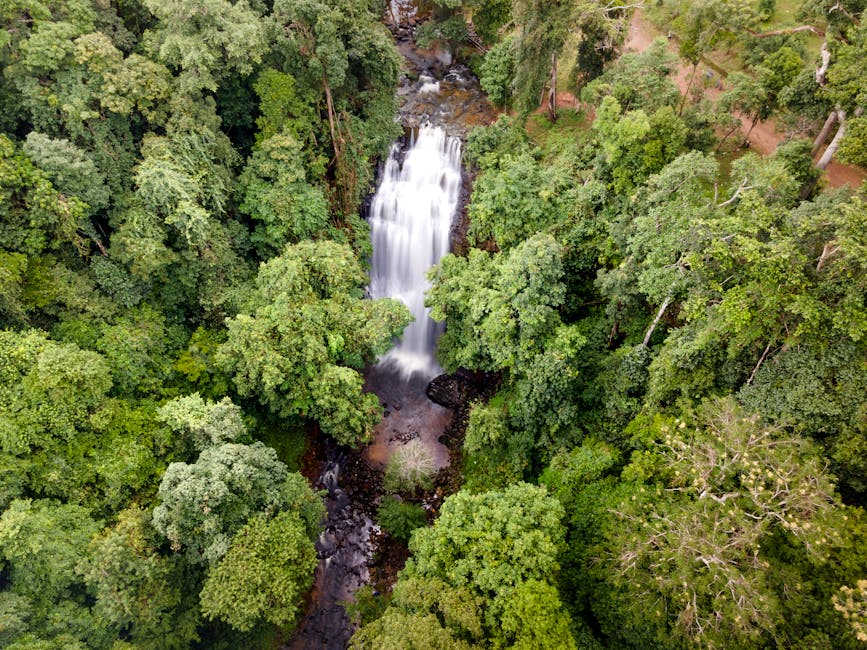
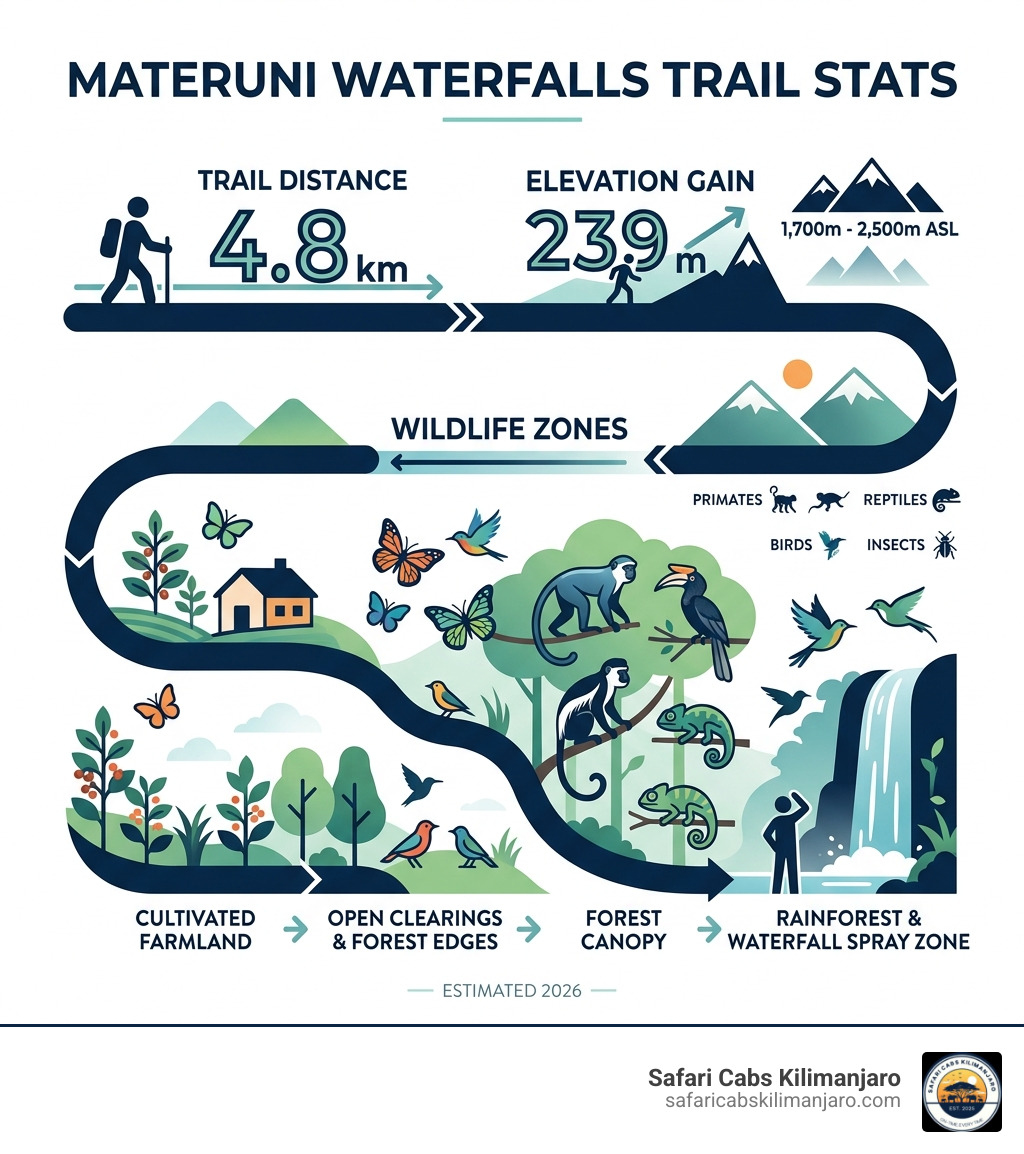
Tucked into the fertile lower slopes of Mount Kilimanjaro, about 14 km from Moshi, the Materuni area sits at roughly 1,700 to 2,500 meters above sea level. That altitude range — combined with volcanic soil, glacier-fed streams, Chagga coffee farms, and dense tropical rainforest — creates a layered ecosystem that supports a surprising variety of wildlife. The 70-meter waterfall itself draws moisture-loving species into its spray zone year-round.
The 4.8 km out-and-back trail (moderate difficulty, about 239 meters of elevation gain) is not just a walk to a waterfall. It is a moving wildlife corridor, where the landscape shifts from cultivated farmland to deep rainforest canopy within a single hike.
I’m Bokun, a travel content specialist with hands-on experience connecting international visitors to the best nature and wildlife experiences across northern Tanzania, including planning transfers and day trips for Materuni waterfalls wildlife spotting with Safari Cabs Kilimanjaro. Whether you’re arriving from Kilimanjaro Airport or heading out from Moshi, stress-free access to this trail is closer than you think.
Know your materuni waterfalls wildlife spotting terms:
Materuni Waterfalls Wildlife Spotting: What to Expect
When we set out for materuni waterfalls wildlife spotting, the first thing we notice is the sheer vibrancy of the environment. Unlike the arid plains of the Serengeti, Materuni is a vertical oasis. The 70-meter (approximately 230-260 feet) waterfall is the tallest in the region, and its constant misting creates a microclimate that keeps the surrounding forest lush even when the rest of Tanzania feels dry.
As we hike the trail, which is rated 4.8 out of 5 by many outdoor enthusiasts, we aren’t just looking for big animals. The magic here lies in the biodiversity of the rainforest and the way it interacts with the local Chagga village life. We can expect to see everything from acrobatic primates to delicate chameleons hiding in plain sight. Because the area is located on the boundary of the Kilimanjaro National Park, it serves as a vital buffer zone where animals can roam freely between the high-altitude forests and the fertile valley below. Materuni Waterfalls is more than a destination; it is a living, breathing ecosystem fed by the glaciers of the mountain.
Primate Encounters in the Canopy
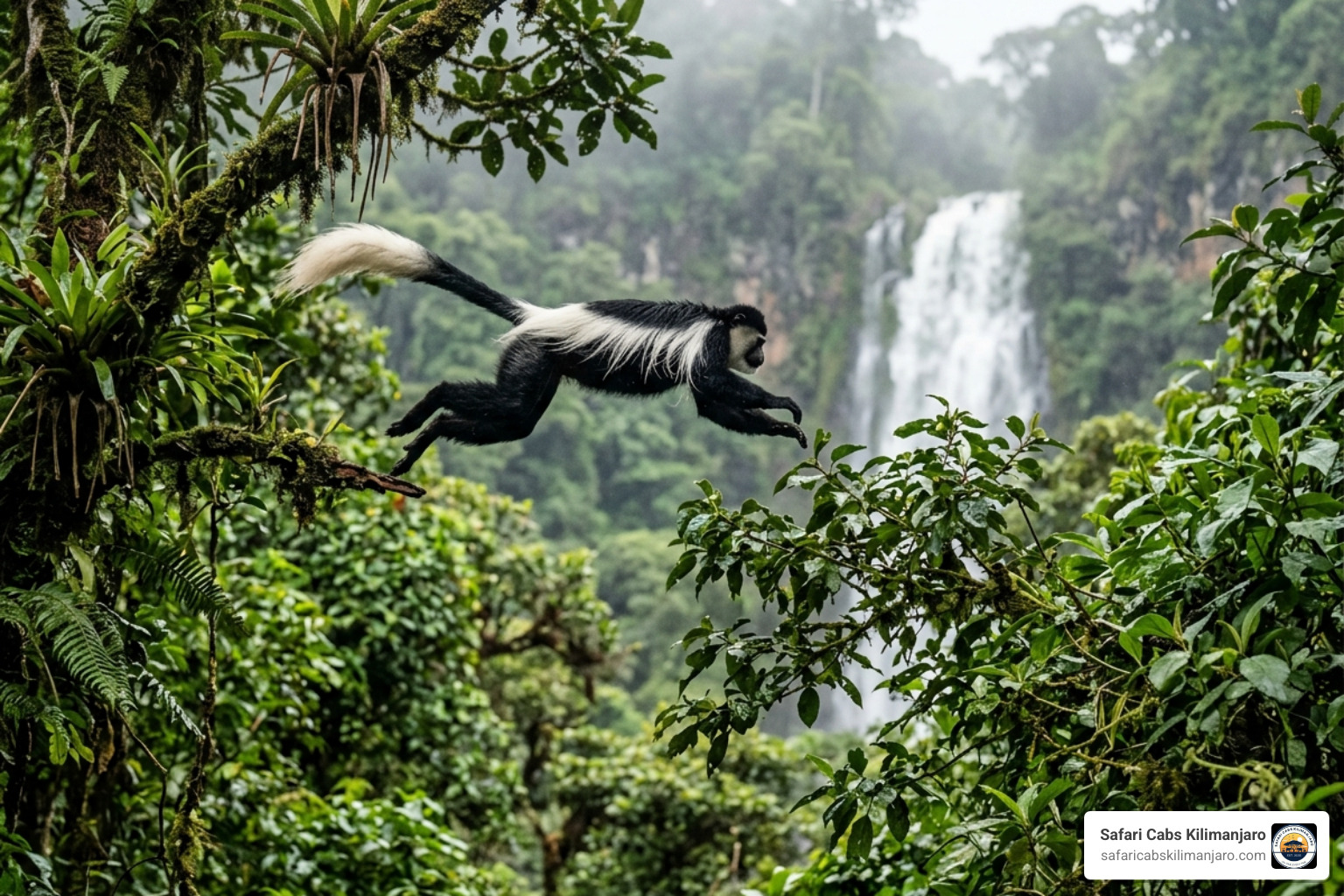
The stars of the show during any materuni waterfalls wildlife spotting excursion are undoubtedly the monkeys. Two main species dominate the canopy here: the Black-and-white colobus and the Blue monkey (also known as the Sykes’ monkey).
The colobus monkeys are easy to identify by their striking white mantles and long, flowing tails. We often see them performing daring leaps between the tall mahogany and fig trees. They are strictly arboreal, meaning they rarely touch the ground, and their social structures are fascinating to observe. Usually, we find them in small troops led by a dominant male.
Blue monkeys, on the other hand, are a bit more curious and less shy. Despite their name, they aren’t actually blue but have a dark, slate-grey coat. We often spot them near the edges of the coffee farms where they occasionally “borrow” a snack. Observing these primates in their natural habitat requires a bit of patience and a quiet step. We recommend stopping occasionally to listen for the rustle of leaves or the distinctive “chirping” calls they use to communicate.
Birdwatching Hotspots Along the Trail
For those of us with a passion for birding, Materuni is a paradise. The trail features “multi-voice” birds—a term locals use to describe the incredible symphony of calls that echo through the valley. The mix of tropical fruit trees in the village and indigenous forest trees creates a perfect feeding ground.
One of the most sought-after sightings is the Silvery-cheeked Hornbill. These large, prehistoric-looking birds are often seen flying in pairs, their heavy wings making a loud “whooshing” sound. Other species to look out for include:
- Hartlaub’s Turaco (look for a flash of crimson under their wings)
- Variable Sunbirds (attracted to the wild flowers)
- African Paradise Flycatchers
The best birdwatching hotspots are usually found in the mid-trail sections where the forest thickens and near the waterfall zone where the high humidity supports an abundance of insects—the primary food source for many of these birds.
The Ecosystem: From Coffee Farms to Rainforest Canopy
The biodiversity at Materuni is a direct result of its unique geography. The volcanic soil from Mount Kilimanjaro is incredibly fertile, allowing for a “multi-story” farming system developed by the Chagga people. In this system, tall forest trees provide shade for Arabica coffee bushes, which in turn grow alongside banana trees.
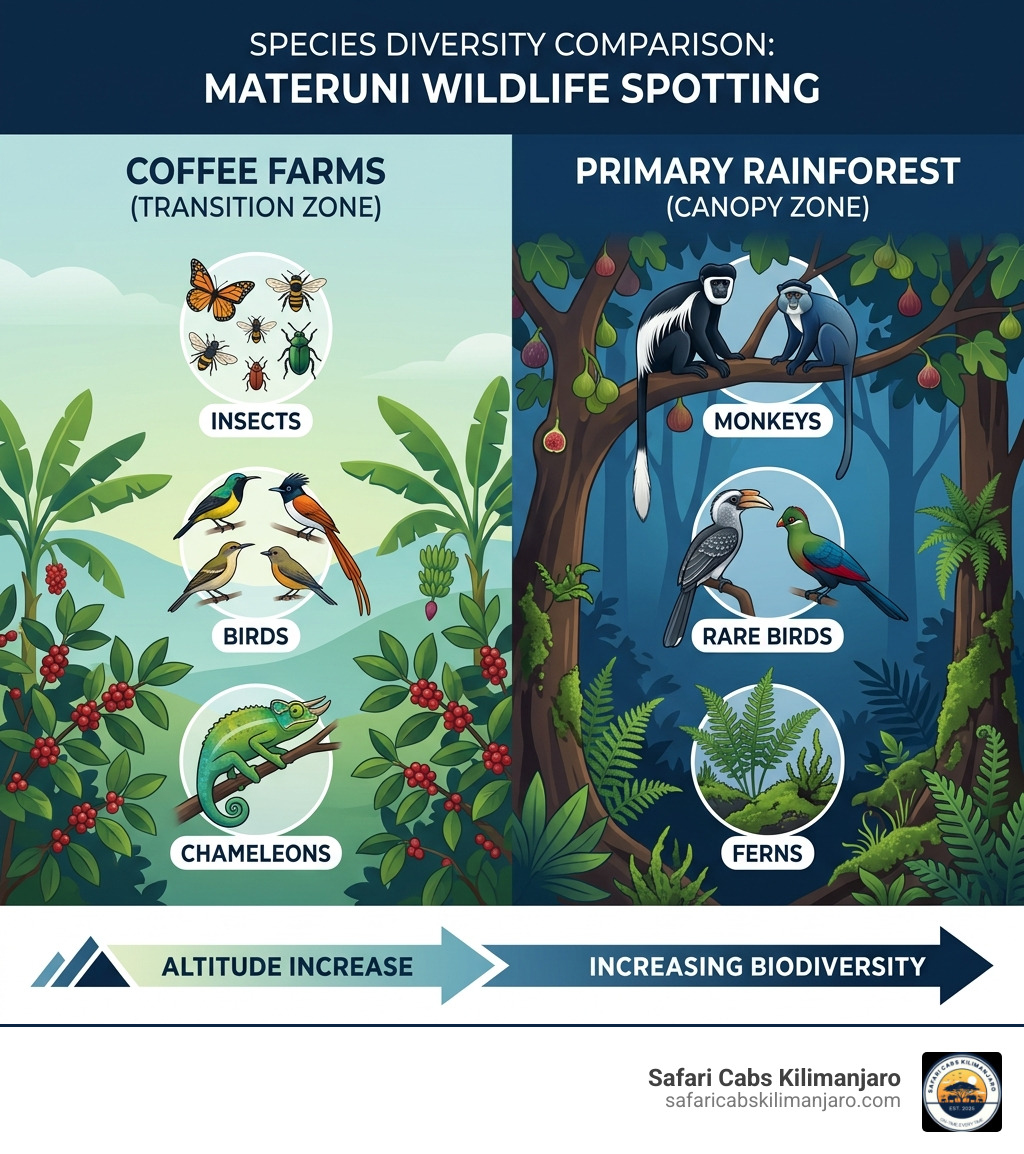
This man-made forest actually supports wildlife. The coffee farms act as a bridge between the village and the primary rainforest. We’ve found that many species thrive in this transition zone.
| Feature | Coffee Farm Zone | Primary Rainforest Zone |
|---|---|---|
| Dominant Flora | Coffee, Banana, Avocado | Ancient Ferns, Moss, Giant Figs |
| Key Wildlife | Chameleons, Butterflies | Colobus Monkeys, Hornbills |
| Elevation | ~1,700m | ~2,500m |
By visiting the Materuni Waterfall Day Trip, we get to see how human tradition and nature coexist. The Chagga people have lived here for centuries, and their traditional farming methods have preserved the soil and water sources that the wildlife depends on.
Chameleons and Rare Insects
If you take your eyes off the canopy and look closely at the shrubs along the path, materuni waterfalls wildlife spotting takes on a much smaller, more intricate scale. This area is famous for its chameleons, including the rare two-horned chameleon.
These masters of camouflage are notoriously difficult to spot. They move with a slow, rocking gait that mimics a leaf blowing in the wind. We often find them on the stems of coffee plants or in the dense undergrowth near the trail’s edge. This provides an incredible opportunity for macro-photography, but we always remind our guests to look but not touch.
The insect life is equally impressive. Colorful butterflies, ranging from the giant Swallowtails to the brilliant Blue Mother-of-Pearls, flit through the open clearings where the sun hits the trail. These insects are vital pollinators for both the wild forest flowers and the local coffee crops.
How the Waterfall Influences Local Habitats
The waterfall itself, locally known as “Nambe” (meaning first-born), is the heart of this ecosystem. As the water plunges 70 meters into the basin, it creates a constant “spray zone.” This high-moisture area supports a unique variety of flora that you won’t find elsewhere on the trail.
The rocks around the basin are carpeted in thick mosses and liverworts. Giant ferns, some reaching several meters in height, thrive in the cool, damp air. This microclimate attracts specific amphibians and moisture-loving insects. The sound and vibration of the water also influence animal behavior; many birds use the roar of the falls to mask their own movements from predators, while some primates visit the pool area in the early morning to drink from the crystal-clear glacier runoff.
Planning Your Materuni Waterfalls Wildlife Spotting Adventure
Planning a trip to Materuni is relatively straightforward, but there are a few things we suggest to ensure you have the best experience. The hike is about 45 to 60 minutes one way, covering a total distance of 4.8 km. While the trail is of moderate difficulty, it can become quite muddy and slippery after a rain shower.
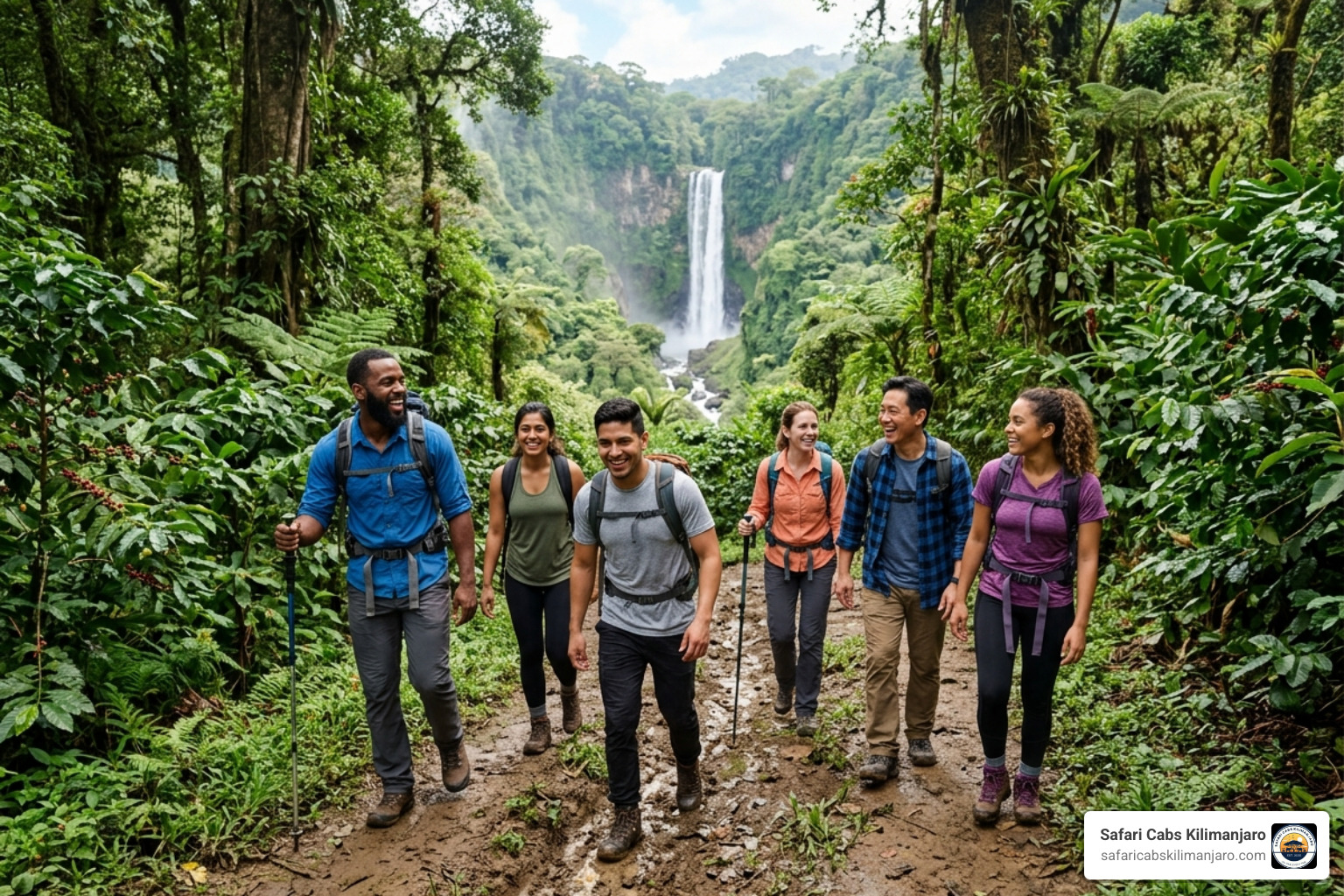
We at Safari Cabs Kilimanjaro specialize in making this journey seamless. Whether you need a transfer from Moshi (a 30–45 minute drive) or a direct ride from Kilimanjaro International Airport (JRO), our experienced drivers ensure you arrive safely and on time. Having a reliable vehicle is especially important because the road leading to the village can be steep and rutted.
Best Times for Materuni Waterfalls Wildlife Spotting
Timing is everything when it comes to wildlife. For the best materuni waterfalls wildlife spotting results, we recommend two main windows:
- The Dry Seasons (June to October and January to March): These months offer the clearest skies and the best trail conditions. When the weather is dry, primates are more active in the canopy, and you are more likely to get a clear view of Mount Kilimanjaro from the trail.
- Early Morning: Most wildlife is most active between 7:00 AM and 10:00 AM. This is when birds are most vocal and monkeys are actively foraging for food.
While the rainy season (March to May) makes the waterfall look spectacular and the forest incredibly green, the trails can be “demanding” and the wildlife often seeks deep cover to stay dry.
Ethical Wildlife Spotting at Materuni Waterfalls
We believe in responsible tourism. The wildlife at Materuni is wild, and we want to keep it that way. To ensure the preservation of this beautiful area, we ask all visitors to follow these ethical guidelines:
- No-Handling Policy: Never attempt to catch or hold chameleons or other animals. This causes them immense stress and can lead to injury.
- Keep Your Distance: Use binoculars for a closer look. Getting too close to nesting birds or primate troops can disrupt their natural behavior.
- Noise Reduction: Keep voices low. Loud noises can scare off shy species like the colobus monkey.
- Stay on the Trail: Venturing off the path can trample sensitive plants and disturb small ground-dwelling creatures.
- Do Not Feed the Animals: Feeding monkeys makes them aggressive and dependent on humans, which ultimately leads to conflict with the local community.
Frequently Asked Questions about Materuni Wildlife
Can you swim in the pool without disturbing animals?
Yes, you can! Swimming in the natural plunge pool at the base of the falls is a highlight for many. The water is cold and refreshing, as it comes directly from the glaciers of Kilimanjaro. While there are some small aquatic insects and occasionally mountain crabs in the streams, your swim won’t disturb the larger wildlife, as they typically stay in the trees or the denser brush away from the main swimming area. Just be sure to use biodegradable sunblock to keep the water pure!
Are the monkeys at Materuni dangerous?
Generally, no. The Blue monkeys and Colobus monkeys at Materuni are not aggressive toward humans. However, like all wild animals, they can become defensive if they feel cornered or if they think their young are in danger. The most important rule is to never offer them food. Once monkeys associate humans with food, they can become pests. Keep a respectful distance, and you’ll enjoy a peaceful observation.
What should I wear for optimal wildlife viewing?
We recommend wearing neutral colors (greens, browns, or khakis) to blend into the forest environment. Bright colors can sometimes startle birds and primates. Most importantly:
- Sturdy hiking boots: The trail can be muddy and steep.
- Binoculars: Essential for spotting hornbills and monkeys in the high canopy.
- Rain gear: Even in the dry season, the mountain can produce unexpected showers.
- Insect repellent: To keep the mosquitoes at bay while you’re looking for chameleons.
Conclusion
Materuni waterfalls wildlife spotting offers a unique window into the soul of Kilimanjaro. It is a place where you can smell the roasting coffee, hear the roar of the “first-born” waterfall, and see the flash of a colobus monkey’s tail all in one afternoon. It is an adventure that combines the best of Tanzanian culture and natural beauty.
At Safari Cabs Kilimanjaro, we are dedicated to making your visit to Materuni as stress-free as possible. From our well-maintained vehicles to our professional drivers who know the Kilimanjaro roads like the back of their hands, we provide the reliable transportation you need for your Day Trips in Moshi.
Whether you are looking for a light acclimatization walk before your big climb or a relaxing day trip to connect with nature, Materuni is waiting for you. Book your transfer with us today and get ready to see the Kilimanjaro foothills from a whole new perspective.