

What Are Materuni Waterfalls? Your Quick Answer
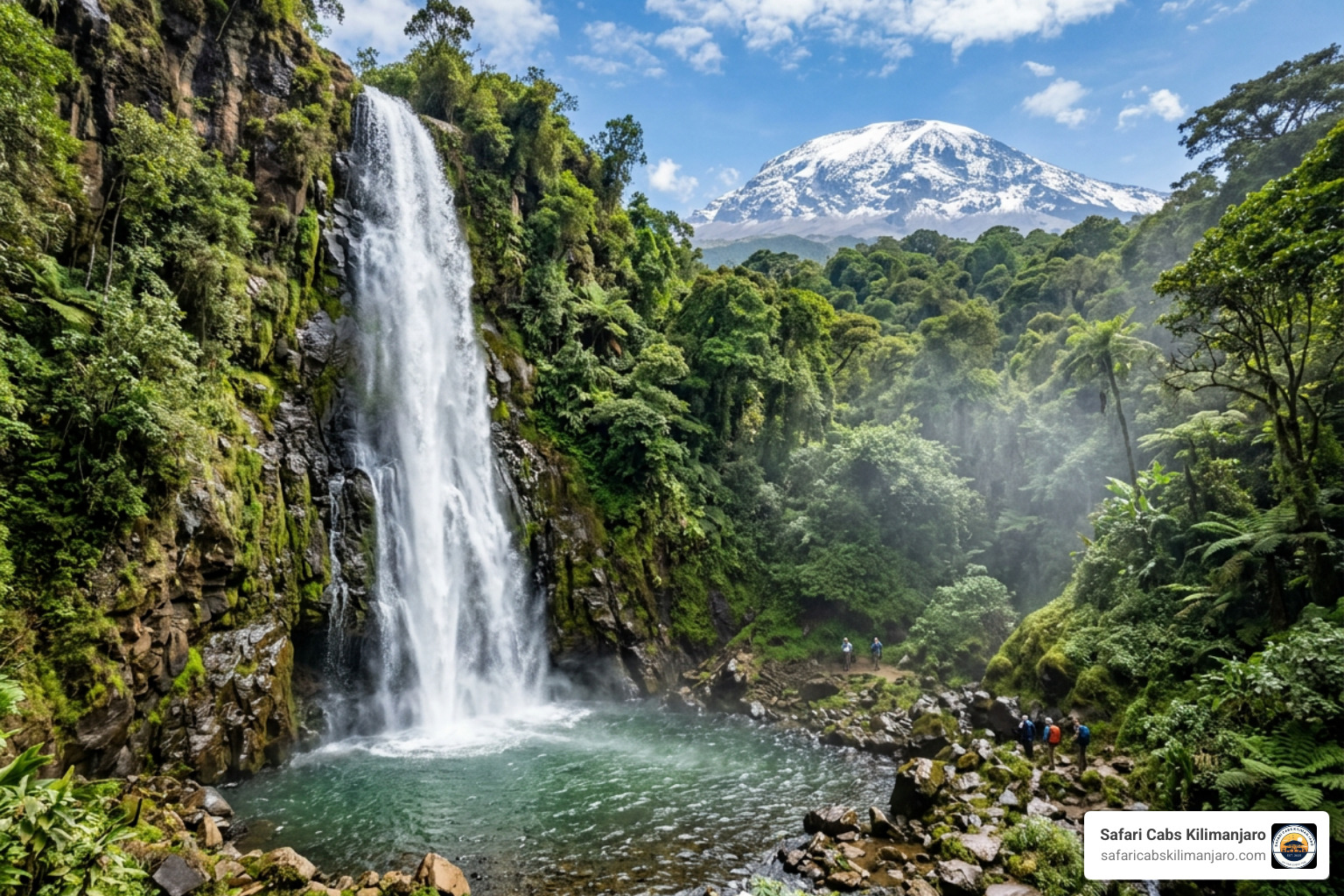
Materuni waterfalls is one of the tallest waterfalls near Moshi, Tanzania, dropping around 70–90 meters into a crystal-clear natural pool fed by glacier water from Mount Kilimanjaro.
Book Your Transfer
Fill in your details and we'll confirm your booking on WhatsApp.
Here are the key facts at a glance:
| Detail | Info |
|---|---|
| Height | 70–90 meters |
| Location | Materuni Village, Kilimanjaro Region, Tanzania |
| Distance from Moshi | ~14–15 km (45-minute drive) |
| Elevation | 1,540 m above sea level |
| Local Name | Nambe (“first-born”) Waterfall |
| Hike Duration | 30–45 minutes one-way from the village |
| Best Time to Visit | July through September |
| Can You Swim? | Yes, in the natural pool at the base |
| Typical Full Tour Length | 5–6 hours |
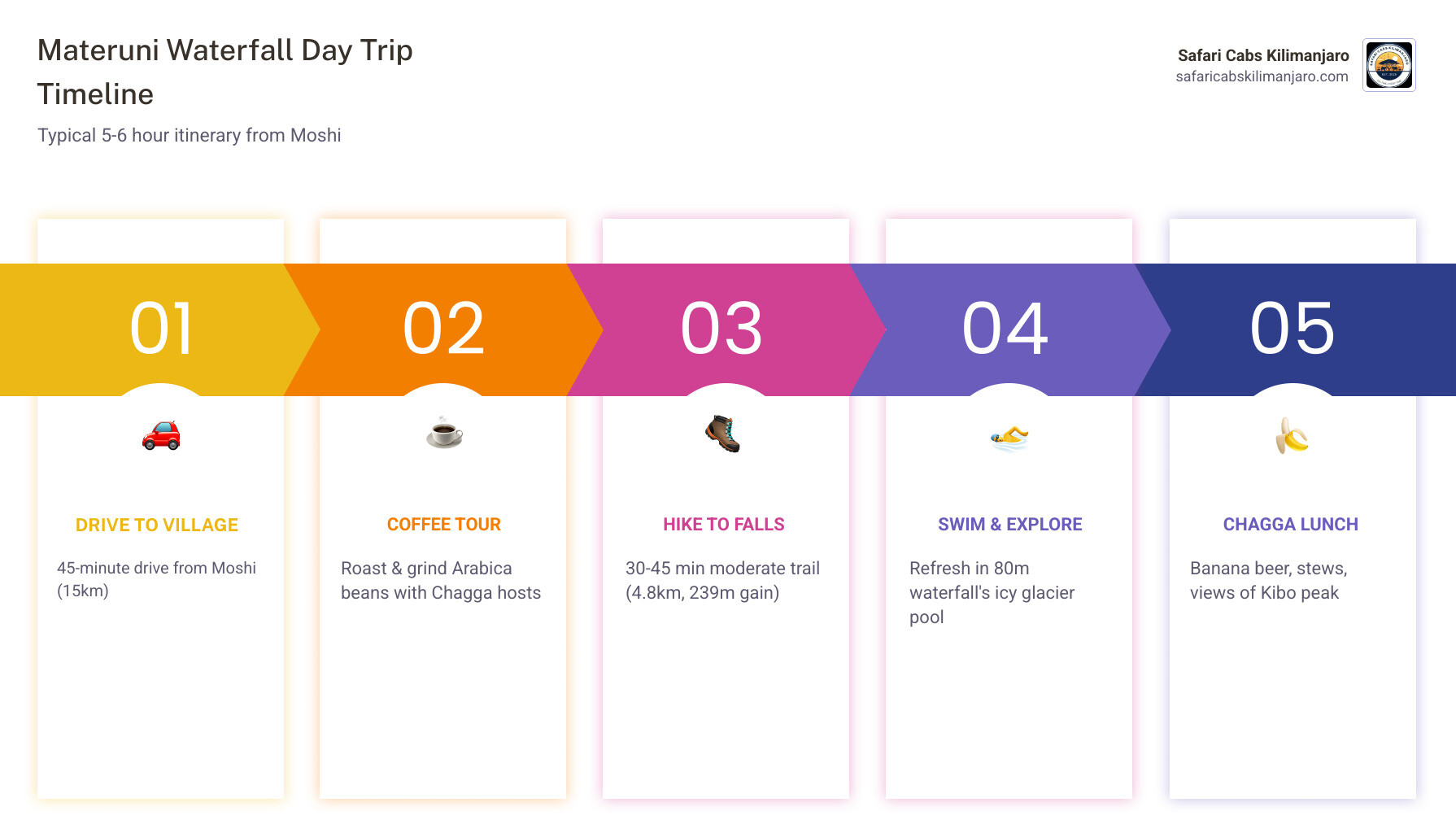
Tucked into the foothills of Mount Kilimanjaro, Materuni is more than just a waterfall. It sits inside a living Chagga village where coffee has been grown and roasted by hand for centuries. Most visitors combine the waterfall hike with a traditional coffee tour and a home-cooked Chagga lunch — all in a single day trip from Moshi.
It is the kind of place that surprises people. You arrive expecting a nice waterfall. You leave having roasted your own coffee beans, tasted banana beer, and eaten a slow-cooked lunch with views of Kibo peak.
This guide covers everything you need to plan your visit — including how to get there, what the hike is really like, what things cost, and what to pack.
Planning Your Trip to Materuni Waterfalls
When we talk about the Materuni waterfalls, we are talking about a destination that feels like the “gateway” to the soul of the Kilimanjaro region. Located at the precise geographic coordinates 3°15′00″S 37°24′01″E, this stunning site sits at an elevation of approximately 1,540 meters above sea level.
The waterfall itself is part of the Mware River, which flows directly from the melting glaciers of Mount Kilimanjaro. This is why the water is so famously crystal clear—and famously chilly! Locally, the falls are known as “Nambe,” which translates to “first-born.” This name is a nod to its status as the first major waterfall descending from the slopes of the great mountain.
When to Go
Timing is everything in the Kilimanjaro region. We generally recommend visiting between July and September. During these months, the weather is dry and stable, making the trails much easier to navigate. While the “short rains” in October and November can make the landscape incredibly lush and green, they also turn the dirt paths into slippery mud chutes. If you visit during or just after the rainy season (March–May), the waterfall is at its most thunderous and powerful, but you will need a sturdy pair of boots and a sense of humor for the mud!
Getting There
Most travelers start their journey in Moshi, which is only about 14–15 kilometers away. The drive takes roughly 45 minutes, but don’t let the short distance fool you—the road becomes quite steep and rutted as you climb toward the village. If you are arriving from further afield, we offer reliable transport from Kilimanjaro Airport to Moshi to get your adventure started without the stress of navigating local traffic. From Arusha, expect a longer transit time of about 2.5 hours.
Navigating the Materuni Waterfalls Hike
The hike to the waterfall is a classic “moderate” trail. It is a 4.8km out-and-back route with an elevation gain of about 239 meters. While seasoned hikers might find it easy, the terrain can be tricky for casual walkers.
According to trail maps and hiker reviews, the average completion time for the walk is about 1 hour and 41 minutes total, but we suggest planning for a 45-minute walk each way to account for photo stops and “polepole” (slowly, slowly) pacing.
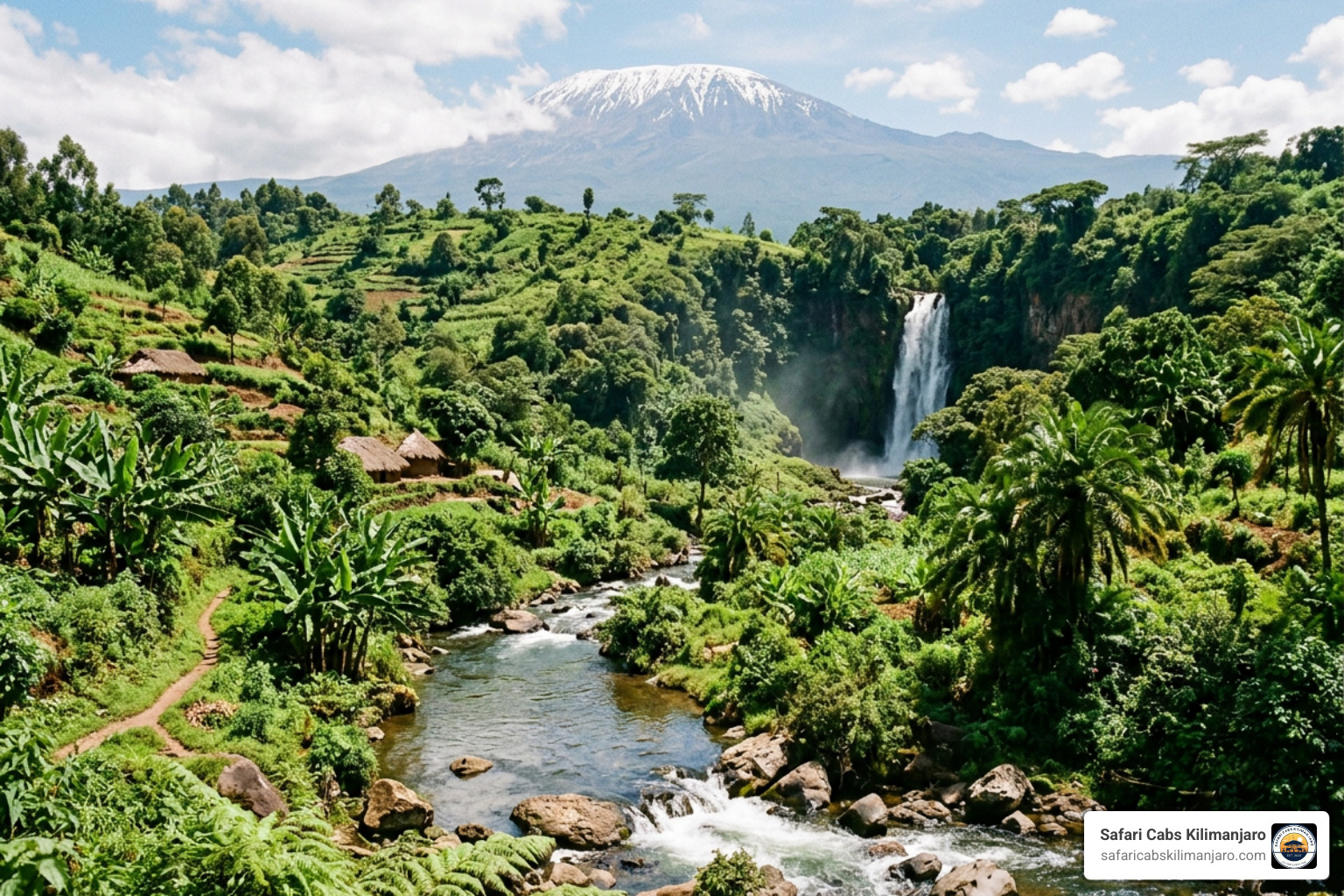
The path winds through a vibrant tropical rainforest and local farms. You will walk past heavy clusters of bananas, avocados, and mangoes. On a clear day, you can look up to see the majestic Kibo peak of Kilimanjaro towering above you. However, be warned: the path is often muddy. Even in the dry season, the proximity to the mountain means localized showers are common. We highly recommend using a walking stick—many local guides will happily find you a sturdy branch at the start of the trail.
The Authentic Materuni Waterfalls Coffee Experience
You cannot visit Materuni waterfalls without experiencing the village’s world-famous coffee culture. Materuni is situated in a prime coffee-growing zone, where the volcanic soil and high rainfall produce some of the best Arabica beans in Tanzania.
The coffee tour is a “bean-to-cup” journey that is as much about entertainment as it is about education. You will learn how to:
- Pick and Peel: See how the coffee cherries are harvested.
- Mortar and Pestle: Use a traditional large wooden mortar to remove the husks.
- Roast: Watch (and smell!) as the beans are roasted over an open fire.
- Grind and Brew: Grind the roasted beans into a fine powder while the local villagers lead you in traditional Chagga songs and dances.
It is a rhythmic, joyful process. By the time you take your first sip of the finished product, you’ll have earned your “local barista” status. This experience is frequently cited in Lonely Planet’s guide to Materuni cultural tours as a highlight of Northern Tanzania.
Cultural Immersion: Chagga Traditions and Village Life
Beyond the coffee and the water, Materuni offers a window into the life of the Chagga people, one of Tanzania’s largest ethnic groups. The village is a model for sustainable eco-tourism, where the proceeds from your visit directly support the local community and the preservation of their heritage.
A Taste of the Slopes
A typical day trip includes a traditional Chagga lunch. This isn’t your standard tourist fare; it is hearty, slow-cooked soul food. You can expect dishes like:
- Machalari: A delicious stew made of green bananas and meat (usually beef).
- Pilau or Wali: Spiced rice or plain rice served with beans and fresh vegetables.
- Seasonal Fruits: Freshly picked avocados, mangoes, or papayas.
For those feeling adventurous, you might be offered a taste of Mbege. This is a traditional banana beer made from fermented bananas and finger millet flour. It has a very distinct, slightly sour taste and a thick texture—it is an “acquired taste” for many, but a must-try for cultural completion!
Village Life and Wildlife
As you walk through the village to register at the village office, keep your eyes peeled. The lush canopy is home to Black and White Colobus monkeys and Blue monkeys. You might also spot chameleons hiding in the bushes (though we remind all our guests to observe these shy creatures without touching or holding them, as it causes them significant stress).
If you are looking for more ways to explore the area, there are several other day trips in Moshi that complement the Materuni experience, such as visits to the Rau Forest or the Chemka Hot Springs.
Essential Logistics: Costs, Packing, and Safety
To help you plan, we’ve broken down the typical costs and requirements for a visit to Materuni waterfalls.
| Expense Item | Estimated Cost (Independent) | Organized Tour (Recommended) |
|---|---|---|
| Village Entry Fee | 10,000 – 15,000 TZS (~$5-$7) | Included |
| Mandatory Local Guide | 25,000 – 40,000 TZS (~$10-$15) | Included |
| Transport (from Moshi) | 100,000 TZS (Taxi) or 2,000 TZS (Daladala) | Included |
| Traditional Lunch | 15,000 – 20,000 TZS | Included |
| Coffee Experience | 20,000 – 30,000 TZS | Included |
| Total per person | ~$40 – $60 | $70 – $95 |
What to Pack
- Footwear: Hiking boots with good grip are non-negotiable. The trail is often slippery.
- Clothing: Wear layers. It can be humid during the hike but chilly once you reach the shaded base of the waterfall.
- Rain Gear: A lightweight rain jacket or poncho is a lifesaver if a mountain mist rolls in.
- Swimwear: If you plan to take the “glacier dip,” bring a swimsuit and a quick-dry towel.
- Water: Bring at least 1.5 liters of drinking water.
- Cash: Carry some Tanzanian Shillings (TZS) for tipping your guides or buying local crafts.
Safety Precautions
The hike is generally safe, but the mud is the biggest hazard. We always tell our guests: “Polepole ndio mwendo” (Slowly is the way to go). Don’t rush, especially on the descents. If you have any mobility issues, please let us know in advance so we can ensure you have the appropriate support.
Frequently Asked Questions about Materuni
Can you swim at the base of the waterfall?
Yes, you can! There is a natural pool at the base of the 80-meter drop. However, be prepared for the temperature. This is glacier water from Mount Kilimanjaro, meaning it is icy cold. Most visitors find it incredibly refreshing after the humid hike, but it is definitely a “quick dip” rather than a long swim. The basin is rocky, so watch your step as you enter.
How do you get to Materuni from Moshi or Arusha?
From Moshi, it is a straightforward 45-minute drive. You can take a private taxi or a local “daladala” (minibus). If you take a daladala, you will be dropped at the bottom of the hill and will have a very long, steep walk up to the village office before the actual hike even begins—we generally recommend a private vehicle for this reason. From Arusha, it is a 2.5-hour journey. Many visitors choose to book a transfer to Moshi first and use it as a base for their waterfall and Kilimanjaro adventures.
Is a guide required for the Materuni hike?
While there is no physical fence preventing you from walking, a guide is effectively mandatory. There is no signage on the trails, and the paths weave through private farmland and village homes. Hiring a local guide at the village office ensures you don’t get lost, provides you with rich cultural context, and supports the local economy. Furthermore, village regulations require visitors to register and be accompanied by a recognized local representative.
Conclusion
The Materuni waterfalls offer one of the most balanced day trips in Tanzania. It combines the physical challenge of a rainforest hike, the sensory delight of fresh Kilimanjaro coffee, and the refreshing power of a 90-meter waterfall.
At Safari Cabs Kilimanjaro, we take pride in being your professional partner for these adventures. Whether you need a reliable airport transfer to get you to your hotel or a private driver to navigate the steep, dirt roads leading to Materuni Village, our team is here to ensure your journey is safe, comfortable, and affordable. We are your gateway to the authentic beauty of the Kilimanjaro region.
Ready to see the “First-Born” waterfall for yourself? Book your Materuni Waterfall Day Trip with us today and let us handle the logistics while you enjoy the views!